I have spent close to a decade helping HR and IT leaders turn ServiceNow into something employees actually feel. And in that time, no process has exposed the gap between intent and experience quite like onboarding.
Onboarding is where every seam in your operating model shows up at once. Recruiting hands off to HR. HR hands off to IT. IT hands off to Facilities. Somewhere in the middle sits a new hire in Mexico, Pakistan or the Netherlands trying to figure out whether their laptop is coming, what systems do they still need to request access to and how to contact their manager and team. Multiply that across countries, sites, business units and individual manager habits, and you do not have a process, you have a hundred variations of one.
That complexity is real, and it is not going away. Global companies carry genuine differences in labor law, works councils, language, plant infrastructure and local compliance. The mistake is assuming that because the underlying complexity is unavoidable, the employee’s experience of it must be complicated too. It does not.
What “fragmented starts” actually cost you
When we work with clients on onboarding, the symptoms are remarkably consistent. Different journeys depending on where someone happens to join. Duplicate work across disconnected channels with unclear ownership. Delayed access to systems and tools on day one, paired with guidance that is thin or simply wrong. HR, Shared Services, IT and Facilities coordinating by email rather than by workflow.
The business consequences follow directly: slower time to productivity, compliance exposure and first-year retention risk. Fragmented starts cost productivity, engagement, retention and confidence.
That last word matters most. A new hire forms a durable judgment about your company in the first two weeks, and they form it from very small signals. Confidence, once lost, is expensive to earn back.
A real example: Ingredion
Stridepath partnered with Ingredion, a global ingredients solutions company, on exactly this problem. Ingredion runs 41 manufacturing facilities and roughly 10,000 employees worldwide, serving customers in 125 countries. Onboarding at that footprint spans North America, LATAM, APAC and EMEA, with real variation at every plant.
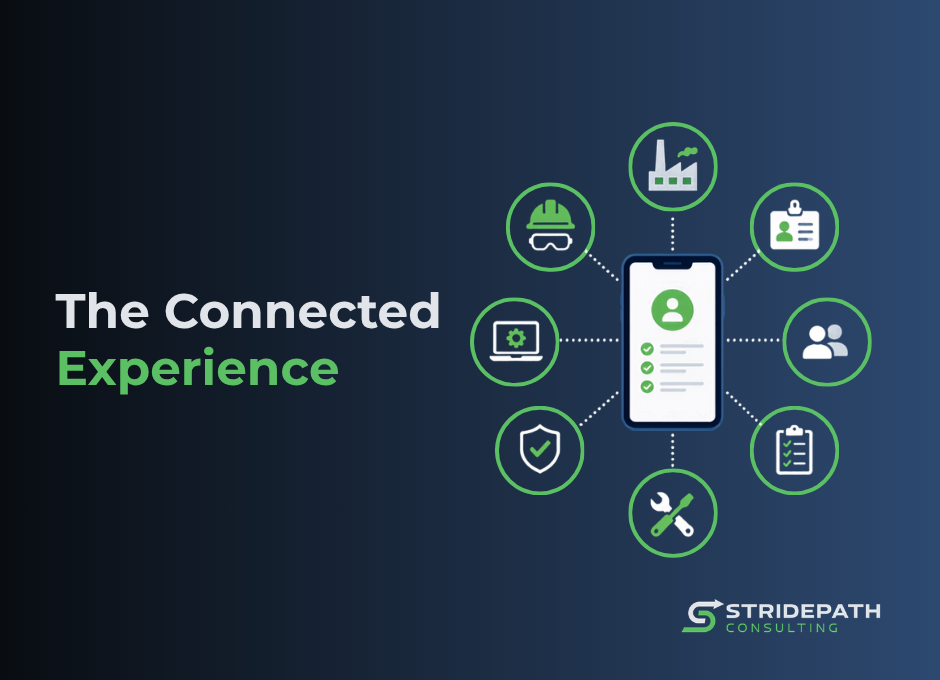
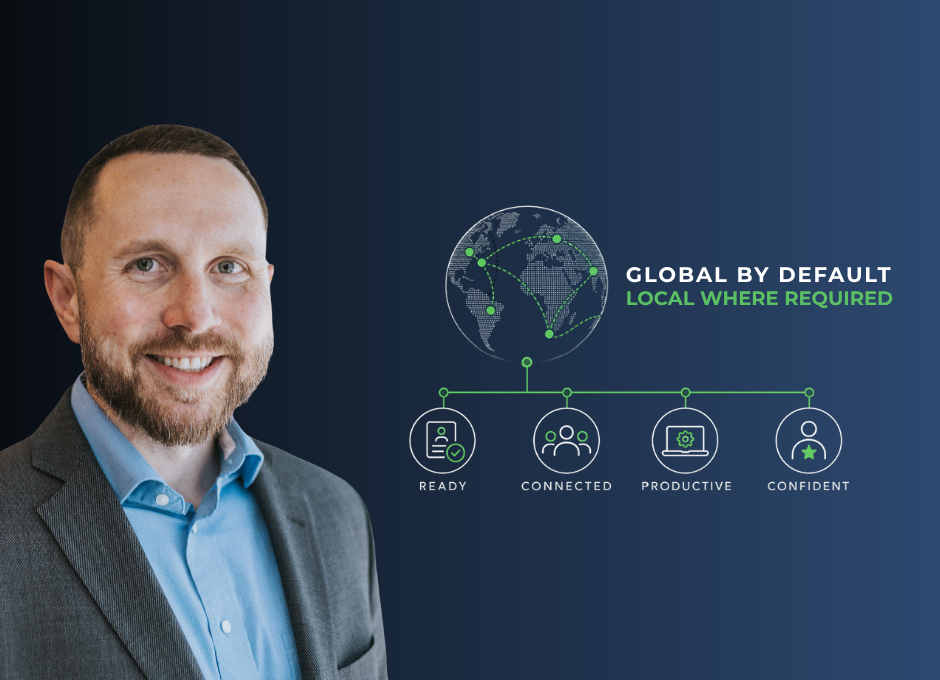
The vision Ingredion set was not “automate onboarding.” It was to make every new hire feel ready, connected and able to contribute, regardless of where they joined. One globally consistent digital experience, beginning before day one and continuing through the first year, while still accommodating local compliance requirements and site variations.
Four goals carried that vision: consistency, readiness, connection and impact. Consistency meant a common experience and clearer expectations across regions. Readiness meant the right resources, guidance and actions at the right time. Connection meant belonging and a tie to culture from day one. Impact meant productivity, retention and compliant execution.
The design principle underneath all of it was one sentence, and it is the sentence I would take to any global onboarding program: global by default, local where required.
How you get there
Simplicity for the employee is manufactured behind the scenes. A few choices did most of the work.
● Design for personas, not for a process diagram. The Ingredion journey was built around ten personas spanning Employee, Manager, Buddy, HR, Facilities, IT and Global Shared Services. Onboarding fails when the manager and the buddy are treated as spectators rather than participants with their own tasks and their own view.
● Extend the journey well past day one. Guided onboarding ran from pre-day-one through the first anniversary, with defined moments at day 1, week 1, month 1, month 3 and months 6 through 12. Most programs stop when the badge works. That is where engagement work actually begins.
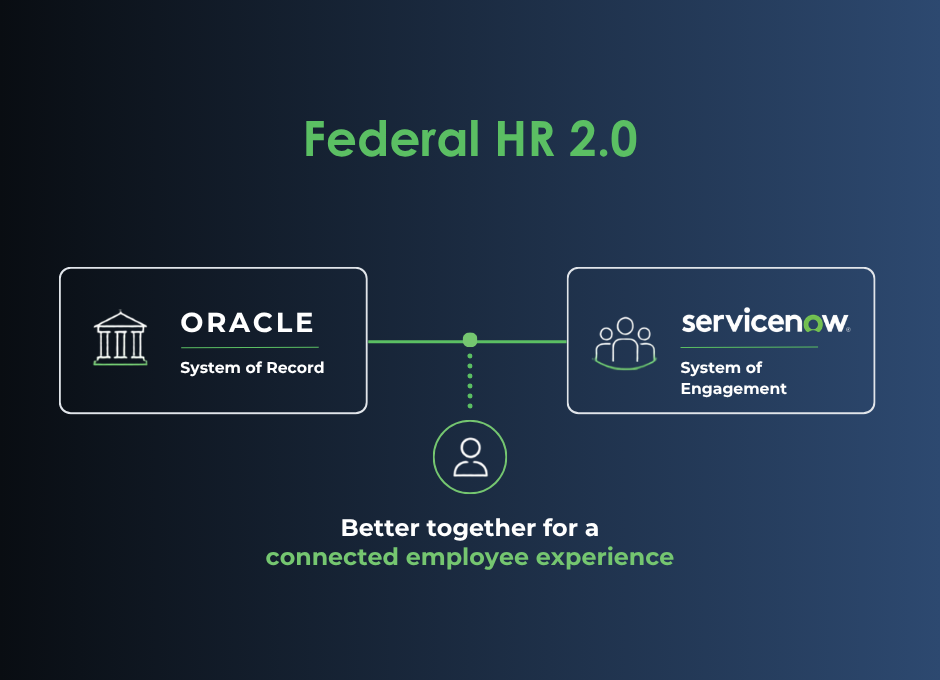
● Connect the ecosystem rather than rebuilding it. ServiceNow HRSD journeys integrated with Workday for worker data, with identity and access provisioning, and with ITSM for equipment and service fulfillment. Lifecycle events orchestrate the activities and task notifications so ownership is explicit rather than assumed.
● Get delegation right. Granular delegation sounds like a configuration detail. In a global program it is a governance requirement, because regional HR and site teams have to act within their own scope without opening the whole system to everyone.
● Phase deliberately. A phase 1 and phase 2 approach, preceded by a phase 0 of global listening, scope alignment and capability introduction, is what keeps a program honest about what can be delivered well.
What made it work
If a peer asked me what mattered most on this program, I would point at four things, none of which are technology.
One global team. Collaboration across HR, IT, Shared Services, Facilities and selected managers and new hires, with a global working group of more than 85 people. Onboarding is nobody’s process alone, so it cannot be designed by one function.
Hybrid execution. Global design ran Agile; localizations ran waterfall. Purists will object. It worked, because the two kinds of work have genuinely different shapes.
Change management early, globally and continuously, inside and outside HR. Adoption is not a launch activity.
Quality obsession. Personas engaged in design and testing, rigorous end to end testing, post-UAT refinement, and rehearsed cutovers across teams.
A strong delivery foundation with active global engagement is what produced the outcome. New hires reported the journey tool was genuinely helpful for guidance and comprehensiveness. Managers said the process helped them evaluate new hire performance and spot where more training was needed. Leadership framed it not as a launch but as a stronger welcome, built to learn and improve with every new hire.
Lessons I would carry into your program
Every implementation teaches you something it would have been cheaper to know earlier.
● Budget real time for translation. Preferred language engagement is central to the experience, not a finishing touch. Plan extra time for translation and for testing in language.
● Assess local infrastructure early, especially mobile and kiosk access at plants. A beautiful portal does not help someone who onboards on a shop floor.
● Hunt edge cases deliberately. They will not surface on their own, and they are where trust in a new process is won or lost.
● Document with discipline. Requirements traceability, stories and test scenarios matter more, not less, on distributed teams.
● Train live in local language and back it with knowledge checks, particularly in plant environments.
● Engage your AMS team early. Post-hypercare support is what determines whether the experience holds up in month six.
The point
Global onboarding will stay complicated. Your regulatory reality, your site variation and your system landscape are all legitimate sources of complexity, and no platform erases them.
What you can control is who absorbs that complexity. Today, in most organizations, it is the new hire, the manager and the HR generalist. It should be the platform. That is the whole shift: move the complexity into orchestration, integration and governance, and give the human being a single, guided, personal experience that simply works.
Ingredion’s onboarding transformation shows what that looks like at global scale. The measure of success was never the go-live. It was sustained team connections, role clarity and confidence in the new hires themselves.
Let’s talk
Stridepath has delivered more than 350 successful ServiceNow HRSD engagements since 2017, with a team of over 70 consultants, technologists and industry practitioners. We believe better employee experiences produce better business outcomes, and onboarding is where that belief gets tested first.
If you are looking at your own onboarding experience and recognizing some of the symptoms above, I would welcome the conversation.
Scott Knecht is a Client Partner at Stridepath Consulting with over 18 years consulting experience and has specialized in ServiceNow since 2017.