When you operate in high-stakes industries – particularly within the federal defense contracting ecosystem, your digital transformation projects rarely enjoy the luxury of extended timelines. When regulatory requirements shift or deadlines loom, your enterprise systems must adapt rapidly. You don’t just need a software rollout; you need to protect business continuity, maintain operational readiness, and ensure full regulatory compliance.
When Stridepath partnered with a prominent defense contractor to lead a rapid-turnaround ServiceNow HRSD implementation, the objective was clear: enable a complete migration off legacy tools and onto a secure, federal-grade platform in just 11 weeks to achieve Cybersecurity Maturity Model Certification (CMMC) compliance.
By deploying ServiceNow HRSD, we established automated case management across HR and Payroll, integrated ADP employee profile data, and implemented strict Center of Excellence (COE) security restrictions to safeguard sensitive information. The result? The client achieved full regulatory compliance on schedule, eliminated legacy system bottlenecks, and established a modern, unified employee service foundation all within an aggressive three month window.
For leadership teams facing similar strict mandates, failure to hit these deadlines isn’t just an inconvenience, it poses a direct threat to your active government business opportunities and core revenue streams.
Here is an insider look at how you can successfully navigate extreme delivery pressures, the process and architectural frameworks required for federal-grade HR delivery, and how you can transform urgent compliance requirements into a long-term strategic advantage.
The Enterprise Dilemma: Tight Deadlines, Rigorous Compliance, and Zero Margin for Error
Transitioning core HR operations across a complex enterprise within a three-month window is a formidable test for any leadership team. When you add strict federal compliance constraints into the mix, the margin for error completely disappears.
To satisfy CMMC standards while simultaneously modernizing your employee service experience, your organization must execute on four core operational imperatives:
- System Migration: Decommission legacy tools like Zendesk and establish ServiceNow HR Service Delivery (HRSD) Professional as your secure primary service delivery platform.
- Strict Data Segregation: Implement role-based Center of Excellence (COE) security restrictions to guarantee complete separation between general HR cases and sensitive Payroll inquiries.
- System of Record Integration: Automate data pipelines with your HR technology stack (such as ADP) to ensure employee profiles, organizational structures, and job attributes sync seamlessly into ServiceNow.
- Rapid Lifecycle Execution: Compress discovery, architecture, configuration, testing, user training, and deployment into an aggressive 11-week delivery window.
When faced with these high-pressure scenarios, waiting weeks just to schedule discovery workshops will cost you valuable time. By prioritizing specialized expertise in ServiceNow Employee Workflows and agile methodologies, you can mobilize expert project teams in days, not months, ensuring your critical deadlines remain intact.
The Fast-Track Delivery Blueprint: Speed Without Chaos
In high velocity projects, traditional linear waterfall approaches- where weeks are spent reviewing static documentation before any configuration occurs- simply fall short. Conversely, moving quickly without clear governance leads to technical debt, security vulnerabilities, and adoption failure.
When faced with tight deadlines, our teams utilize an agile, cross-functional squad model combining Client Partner, Project Manager, Business Process Consultants (BPC), and Technical Consultants (TC) that prioritizes rapid execution without sacrificing technical rigor.
Here is how you can apply this methodology to keep your digital initiatives on target:
1. Define a Minimum Viable Product (MVP) First
Rather than attempting to configure every downstream capability on Day 1, focus your initial phase on establishing a robust Minimum Viable Product (MVP) aligned directly with your immediate compliance and operational priorities. By locking in core case management, foundational COE structures, and secure intake workflows first, you protect your go-live date while building a solid foundation for future growth.
2. Leverage Parallel Workstreams & Real-Time Prototyping
Instead of waiting for sign-offs on lengthy functional spec documents, your process requirements are mapped, configured, and validated in real time. This iterative feedback loop gives you immediate visibility into how your processes function in ServiceNow, allowing for faster approval cycles and cutting delivery timelines in half.
3. Connect Your Systems of Engagement and Record
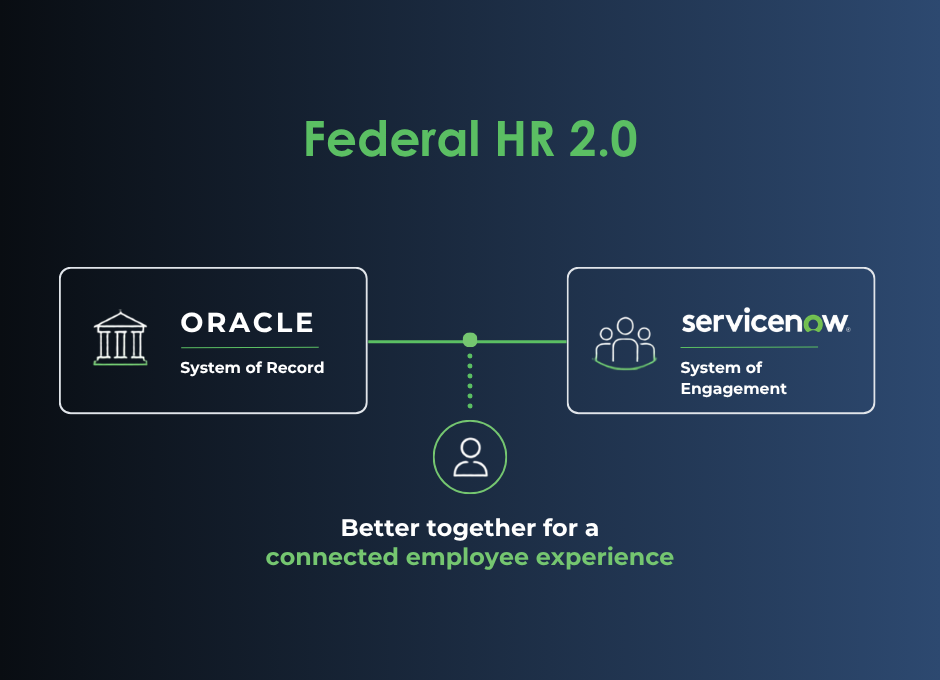
To provide your employees with a friction-free support experience, your ServiceNow platform must act as the primary “System of Engagement,” seamlessly backed by your core HR “System of Record”. By integrating ADP or your HCM employee profile data directly into ServiceNow, your routing rules, manager approvals, and security access tiers are automatically powered by reliable, authoritative source data.
4. Build Security directly into the Architecture
When managing sensitive workforce data under federal scrutiny, privacy cannot be an afterthought. By structuring granular COE security controls at the platform level, you enforce mandatory access boundaries guaranteeing that HR team members cannot access Payroll cases and Payroll staff cannot view confidential HR records.
5. Prioritize Day-1 User Readiness
A system configuration is only as effective as the team operating it. To ensure your organization achieves value immediately upon launch, you need tailored user acceptance testing (UAT) scripts, clear process documentation, and targeted enablement sessions designed around how your employees actually work.
From Rapid Deployment to Long-Term Strategic Value
Reaching “Go-Live” on time and navigating hypercare successfully fulfills your immediate compliance needs, but in enterprise digital transformation, launch isn’t the finish line—it’s the starting line where true value begins.
Once your core foundation is secure, you can transition your focus from rapid crisis response to long-term strategic platform optimization. Through ongoing Advisory Management Services (AMS), you gain continuous access to senior architects and process consultants without the overhead of building an HRSD platform management team.
With a stable environment in place, your leadership team can systematically execute a multi-year growth roadmap:
- Establish Platform Governance: Institute an executive governance board to evaluate new capabilities, align business stakeholders, and ensure you maximize your ongoing ServiceNow license ROI.
- Rationalize Your HR Tech Stack: Evaluate your broader software landscape alongside ServiceNow experts to identify redundant applications, reduce licensing overhead, and consolidate legacy systems onto a unified platform.
- Align Architecture with FedRAMP Requirements: Navigate complex deployment choices, such as evaluating commercial versus FedRAMP instance strategies, to ensure your architecture stays ahead of evolving federal mandates.
- Expand the Employee Experience: Keep the employee experience at the forefront of every rollout to drive strong user adoption. Over time, you can expand platform capabilities to include unified Employee Center portals, automated Onboarding/Offboarding journeys, Workplace Safety management, and Legal Service Delivery.
Key Takeaways for Your Digital Transformation
When you evaluate your enterprise technology strategy, this successful ServiceNow HRSD 11-week transformation offers several actionable lessons for your executive team:
- Speed and Quality Can Coexist: You do not have to sacrifice process rigor or system stability to meet aggressive deadlines. With disciplined governance, clear scope boundaries, and the right expertise, rapid deployments deliver exceptional results.
- Compliance Requires Native Platform Precision: Satisfying complex regulatory frameworks like CMMC demands deep technical architecture. Securing data at the native COE level protects your organization while maintaining a clean, accessible user experience.
- Connected Workflows Drive Real Impact: When you integrate your core HR systems of record directly into ServiceNow workflows, you eliminate manual data entry, reduce support ticket resolution times, and empower your HR staff to focus on strategic priorities.
- True Partners Focus on Outcomes: Success isn’t measured by software installation alone; it comes from working with trusted advisors who take ownership of your business outcomes and guide you through every phase of growth.
Ready to Accelerate Your ServiceNow Roadmap?
Whether you are facing urgent compliance deadlines, planning a complex legacy migration, or looking to unlock greater value from your existing ServiceNow investment, you don’t have to navigate the journey alone.
At Stridepath Consulting, we specialize exclusively in ServiceNow Employee Workflows helping enterprise organizations like yours simplify complex HR processes, protect business continuity, and build modern employee experiences.
Reach out to our team at [email protected] today to discuss your goals and explore what’s possible!
About the Author: Neda Khaja is a Business Process Consultant at Stridepath Consulting. Neda specializes in helping enterprise organizations translate complex business and regulatory requirements into streamlined ServiceNow workflows and high-impact user adoption strategies.