There’s no shortage of AI in the enterprise right now. But for most employees, work doesn’t feel much different. That’s the disconnect.
What we’re seeing across organizations is less of a technology gap and more of a coordination problem. AI is being added everywhere (into individual applications, workflows, and tools) but rarely with a clear plan for how it all fits together.
Without a defined AI architecture, even the most advanced capabilities create more noise than value.
Employees end up with more entry points. More places to go. More decisions to make about where to start, not just what to do. Picture this: an employee needs help. They know AI is available somewhere, but where do they go? A chatbot in one system? A virtual agent in another? A knowledge base in a third? Each tool might work fine on its own, but together it’s still a fragmented experience. Employees are still navigating multiple systems and guessing where to go. And in many cases, AI has just been layered on top of that complexity.
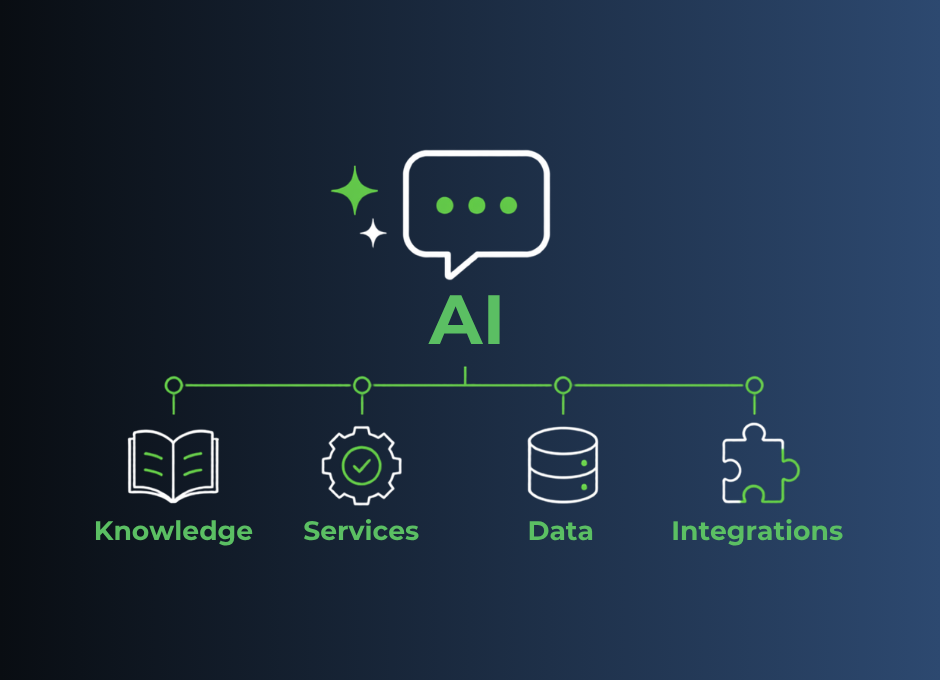
The organizations starting to see real impact are approaching this differently. They’re not asking, “Where can we add AI?” They’re asking, “How should AI show up across the employee experience?” Because AI is more than a feature: it’s an ecosystem. It’s how employees access it, how it understands intent, and how it connects to the systems that actually get work done.
That’s what we mean by AI architecture. And if that architecture isn’t designed around how employees actually work, it won’t deliver value.
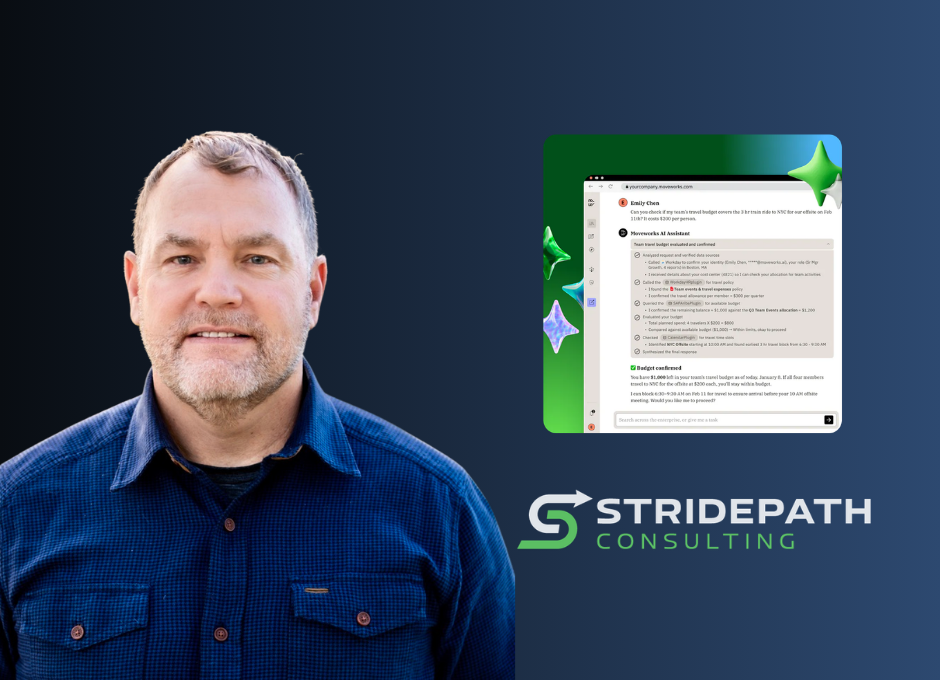
One of the biggest shifts we’re seeing is the move toward more conversational experiences. Instead of navigating a portal or searching through knowledge articles, employees can ask for what they need and the system can take action. That changes the interaction entirely. It removes the need to guess keywords or navigate systems, and instead focuses on intent and outcomes. And when that experience is connected across systems (not confined to a single tool), that’s when AI starts to feel useful.
The organizations getting this right aren’t trying to transform everything overnight. They’re defining what success looks like and identifying a small number of meaningful use cases, then building from there.
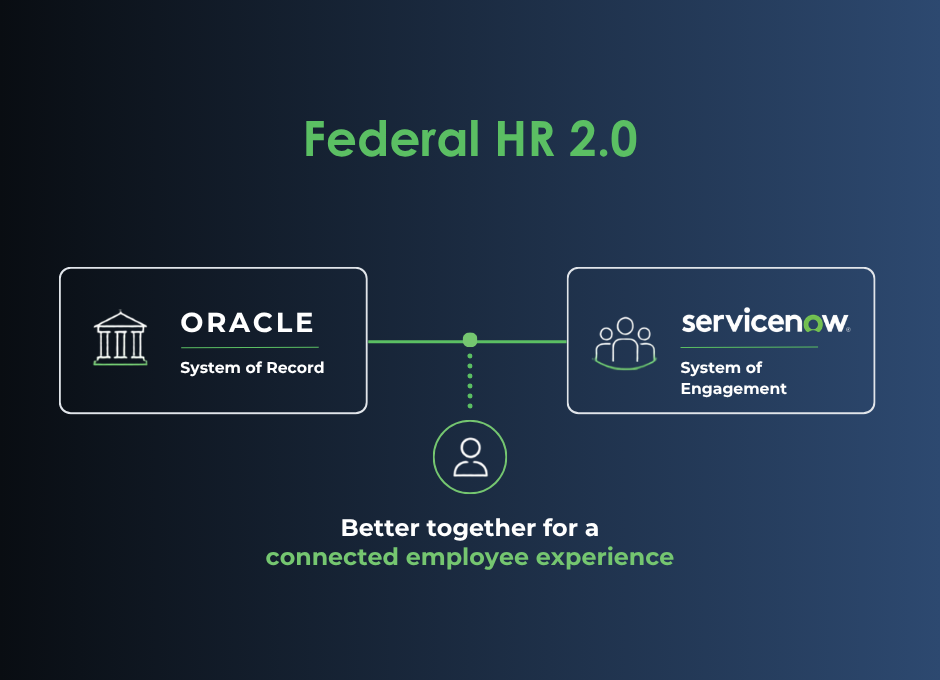
This is where we’re seeing solutions like Moveworks and ServiceNow come together. Not as standalone tools, but as part of a broader approach that connects conversational AI with the workflows behind it.
For organizations that aren’t seeing results from AI yet, it usually comes down to this: They haven’t defined what success looks like, how AI should be used, or the architecture needed to support it. Without that clarity, it’s easy to invest heavily and still feel like you’re not getting anywhere.
AI isn’t going away. But the organizations that benefit from it won’t be the ones that adopt it the fastest. They’ll be the ones that apply it the most intentionally.
For more information or to schedule a call with our team, drop a note to [email protected]!
About the Author: Greg Smith is an execution focused consulting and advisory leader with over 20 years of HR Technology industry experience. His expertise and career focus includes HR systems implementations, consulting operations leadership, and strategic business planning.
Greg grew up in the United States Army Special Operations community as an Airborne Ranger Fire Team Leader and was formally educated as an accountant and an information technologist. This progression has given him a balanced approach between pragmatism and the art of the possible throughout his career.
He is passionate about helping our customers succeed, building high performing teams, playing golf, alpine mountaineering and his family.